Chimney guides
Closing Up and Opening a Cape House: Chimney Checklist
Seasonal occupancy is harder on a chimney than year-round use, and almost nobody expects that.
Short answer
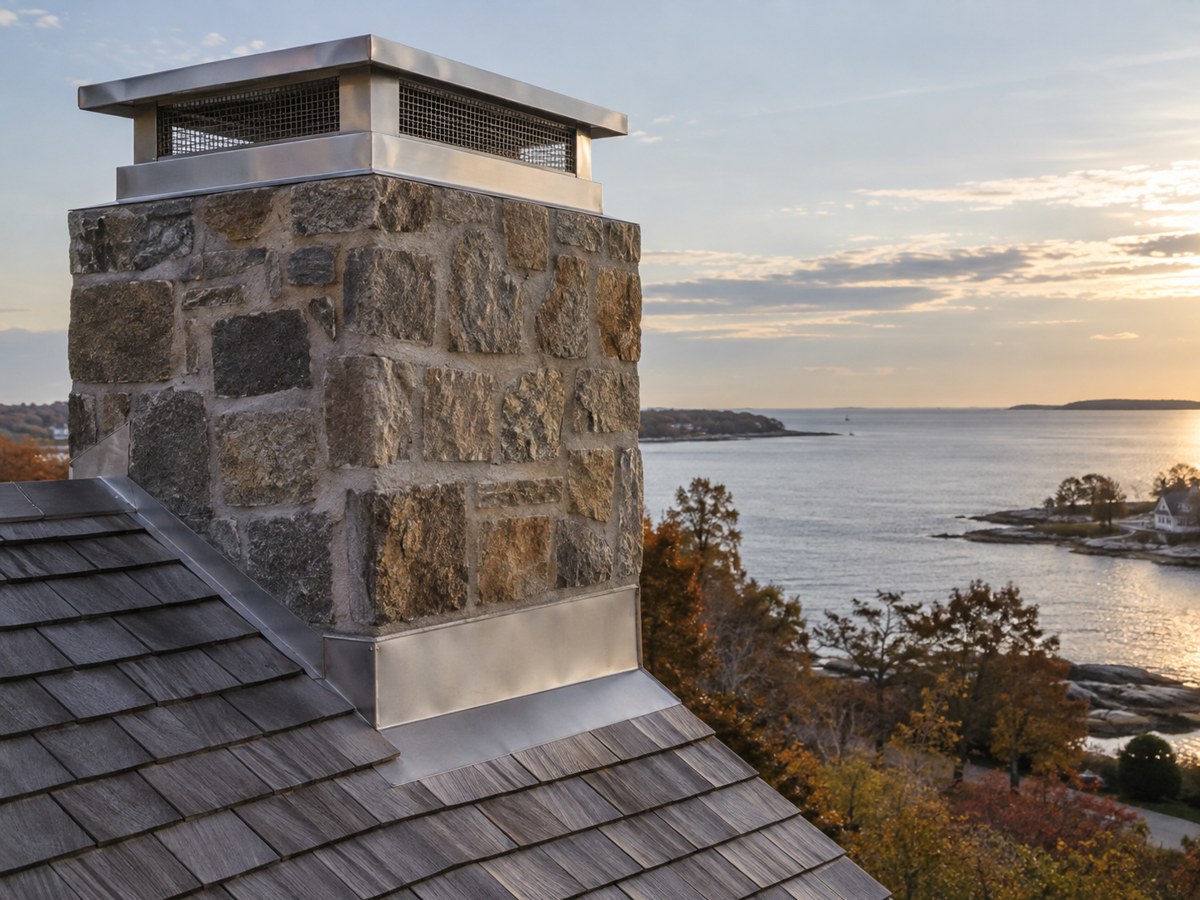
An unheated house leaves a cold flue collecting condensation through the entire wet season with nothing to dry it. That corrodes metal liners from the inside, keeps masonry saturated through every freeze, and produces the musty smell people notice on reopening. The single most useful thing to fit on a seasonal property is a top-sealing damper, which closes the flue at the crown and doubles as the rain cap.
Before you close up
Four things, and the first two are the ones that matter.
Fit a top-sealing damper if you do not have one
It seals at the top of the flue with a silicone gasket rather than metal-on-metal at the throat, so it genuinely closes. That keeps the weather and the humid air out of the whole flue rather than just the firebox, and it replaces the cap.
Have the cap and crown checked while someone can still get up there safely
A cracked crown will take water every time it rains for seven months. That is the worst possible time to have one.
Sweep it if it was used
Creosote and soot left in a flue over a damp winter smell, and acidic deposits keep working on the masonry whether anyone is in the house or not.
Close the damper and note that you did
Obvious, and forgotten constantly. An open damper on an empty house is an open hole in the building for the whole season.
When you open up in spring
The first job is an inspection, not a fire. This is the single most common mistake on seasonal property.
Nesting
A warm open flue in spring is attractive. Chimney swifts are federally protected during nesting season, which means a flue with an active nest cannot simply be cleared — the timing matters and it constrains when work can happen.
Moisture damage
Rust on the damper, staining inside the firebox, a musty smell that does not clear. All of it points at a flue that has been damp since October.
Salt on the metalwork
Anything galvanized on an exposed Cape or island stack will show a winter's worth of corrosion. Stainless is the only specification worth fitting out here, including the fixings — a stainless cap on plated screws fails at the screws.
Do not light it to test it
If something is wrong, a fire is how you find out the expensive way. Book the inspection before the first cold evening you want one.
Why the islands are the hardest case
Nantucket and the Vineyard combine everything: continuous salt, near-total exposure, predominantly seasonal occupancy, and historic district rules that govern what may be visible above the roofline.
The practical consequence is that specification and approval both have to be sorted in advance. A stainless cap that a commission will not accept, ordered in June for a July visit, is a wasted trip — and trips out there are not cheap.
Need this done?
Coastal Chimney Protection across Massachusetts
Free to use, no obligation — we never charge you.
Frequently asked questions
Is it worth heating the house slightly through the winter?
It helps the whole building, not just the chimney, and where the property allows it, it removes most of the condensation problem. A top-sealing damper is cheaper.
Can I fit a top-sealing damper myself?
The part is available and the cable runs down to a handle in the firebox. Getting onto a wet or steep roof to seat it is the risk, and on the Cape that is most of the year.
What if the fireplace is never used at all?
Then the case for a top-sealing damper is stronger, not weaker. An unused open flue collects rain, nesting and damp for years with nobody noticing.
Chimney services near you
- Boston
- Worcester
- Springfield
- Cambridge
- Quincy
- New Bedford
- Lowell
- Fall River
- Lynn
- Brockton
- Somerville
- Newton
- Lawrence
- Framingham
- Brookline
- Malden
- Haverhill
- Waltham
- Medford
- Weymouth